
- Scientific Area
- Dermatologic surgery
SCIENTIFIC AREA
Fillers, Botulinum Toxin, Skin Quality and Aesthetic Improvement Treatments
Choosing an aesthetic dermatologic surgeon for fillers, botulinum toxin, skin quality treatments, and broader facial rejuvenation is often advantageous because dermatologic surgeons are physicians specifically trained in skin biology, facial anatomy, cutaneous aging, procedural dermatology, and complication management.
Their expertise tends to be particularly valuable when the goal is not only cosmetic enhancement, but also maintaining skin health and safety.
Here are the main reasons commonly emphasized in scientific literature and by dermatology societies:
- 1. Deep expertise in skin biology and aging
- 2. Advanced knowledge of facial anatomy
- 3. Strong training in procedural and surgical techniques
- 4. Better integration of “skin quality” treatments
- 5. Higher ability to diagnose hidden skin disease
- 6. Stronger preparation for complications
- 7. Greater focus on natural results and long-term skin health
- 8. Ability to combine medical and aesthetic dermatology
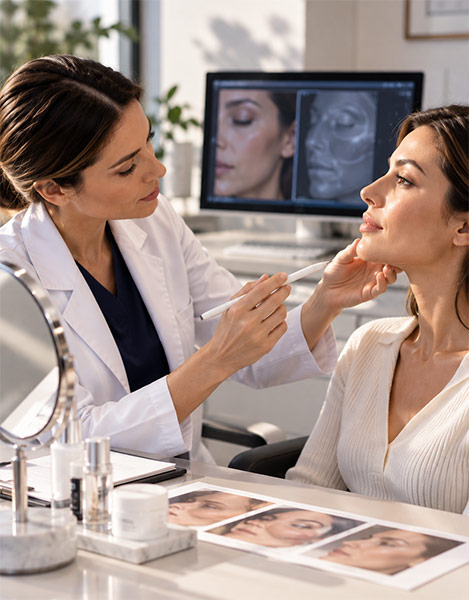
1. Deep expertise in skin biology and aging
Aesthetic dermatologic surgeons are trained to understand:
intrinsic and extrinsic skin aging (photoaging, collagen loss, elastosis)
pigmentary disorders
vascular changes
inflammatory skin diseases
scarring tendencies
barrier dysfunction and wound healing
This matters because aesthetic outcomes are strongly influenced by the quality and biology of the skin, not only by injecting products.
For example, rough texture, dyspigmentation, rosacea, actinic damage, or subclinical inflammation may limit the result of fillers or toxins if not addressed simultaneously.
2. Advanced knowledge of facial anatomy
Injectables require precise understanding of:
vascular anatomy
retaining ligaments
fat compartments
muscular dynamics
individual aging patterns
Dermatologic surgeons often approach the face not only as a cosmetic structure but also as a living cutaneous organ, integrating skin quality with facial architecture.
This is especially relevant for:
high-risk areas (glabella, nose, temple, tear trough)
vascular occlusion prevention
minimizing asymmetries
preserving natural movement
3. Strong training in procedural and surgical techniques
Dermatologic surgery training includes:
cutaneous surgery
minimally invasive procedures
lasers and energy-based devices
scar management
tissue healing
reconstruction
This procedural background can be helpful when combining injectables with:
resurfacing
scar revision
regenerative procedures
tightening devices
skin rejuvenation protocols
The philosophy is often multimodal and layered treatment, rather than relying only on syringes.
4. Better integration of “skin quality” treatments
Modern Aesthetic dermatology increasingly focuses on skin quality improvement, instead only volumization.
This may include:
biostimulatory approaches
collagen induction treatments
laser and medical lights therapies
pigment correction
vascular treatments
acne scar remodeling
topical prescription regimens
regenerative dermatologic procedures
A dermatologic surgeon can often integrate:
fillers
botulinum toxin
energy-based devices
cosmeceuticals
prescription skincare
treatment of underlying dermatologic disease into one coherent plan.
5. Higher ability to diagnose hidden skin disease
Sometimes a cosmetic concern is actually driven by a dermatologic condition.
Examples:
“redness” → rosacea
“rough skin” → actinic damage
“enlarged pores” → sebaceous disorders
“dark spots” → melasma or lentigines, nevi or skin tumors
“poor texture” → inflammatory dermatosis
Treating the underlying diagnosis can improve outcomes more than cosmetic intervention alone.
6. Stronger preparation for complications
Although fillers and botulinum toxin are generally safe, complications can occur.
Examples include:
vascular occlusion
tissue ischemia
nodules or granulomas
delayed inflammatory reactions
infection
pigment alteration
scarring
eyelid ptosis
paradoxical aesthetic outcomes
Dermatologic surgeons are trained in cutaneous emergency recognition and management, wound healing, and tissue preservation. Early recognition is critical—especially for filler vascular compromise.
7. Greater focus on natural results and long-term skin health
Many dermatologic surgeons favor:
prevention
gradual enhancement
preservation of facial identity
maintenance of skin function
age-appropriate rejuvenation
Rather than simply “adding volume,” treatment may focus on:
restoring proportions
improving luminosity
texture refinement
tightening
pigmentation balance
prevention of future aging changes
8. Ability to combine medical and aesthetic dermatology
An advantage unique to dermatology is the ability to treat beauty and pathology simultaneously.
For example:
A patient wanting rejuvenation may also have:
rosacea
melasma
acne
actinic keratoses
early skin cancers
inflammatory disorders
These can be recognized and managed during aesthetic care.
Situations where a dermatologic surgeon may be particularly valuable
You may especially consider an aesthetic dermatologic surgeon when:
you want natural-looking outcomes
you seek skin quality improvement, not only volume
you have sensitive, pigmented, rosacea-prone, or scar-prone skin
you want combined injectables + lasers + resurfacing
you have prior filler complications
you want treatment in high-risk facial areas
you have a history of skin disease
you want a physician experienced in both aesthetics and skin health.
In short, the rationale for choosing an aesthetic dermatologic surgeon is that they generally combine expertise in skin disease, skin aging, facial anatomy, minimally invasive procedures, and complication management, aiming not only for cosmetic improvement but also for healthier, more resilient skin and durable, natural results.
Stay connected with ISDS
Get the latest news, events and educational opportunities.